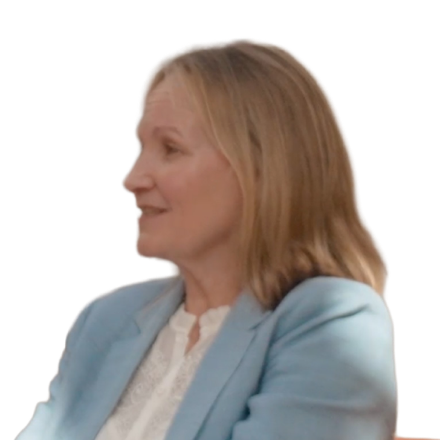
Making it. How I became CEO
From CFO to CEO: Sara Daw on growing The CFO Centre
In this episode of Making it. How I became CEO:
Louisa Murray, Chief Sales Officer at Equals | Railsr, sits down with Sara Daw to discuss how her experience as a CFO shaped her journey to becoming CEO of The CFO Centre — an organisation that supports growing companies with senior financial leadership through flexible, fractional CFO support.
Sara shares her insights on setting a clear vision and inspiring others to join you on that journey. She also talks about how global challenges, technological advances, and geopolitical shifts are influencing agile talent strategies, and why fractional working can be a smart approach to building flexible, high-impact teams.
Whether you’re navigating a leadership transition or scaling a growing organisation, this episode offers practical lessons and real-world advice from someone who has done it first-hand.
Opening & introduction
Sara Daw: I hadn't really thought about leading. Originally it was about building my own portfolio as a fractional CFO, part-time FD, whatever you want to call me. It was about making that difference and doing it alongside bringing up my children — that was the beauty of the model, that I was able to do both.
Louisa Murray: Hello Sara. Thank you for being here. I really appreciate it. Full disclosure, my husband is a CFO, so I have a little bit of knowledge about what being a CFO is all about. But did you want to be a CFO when you were younger, or was there something else you had ambition to be?
Sara Daw: No, I don't think I even knew what a CFO was when I was younger. I actually wanted to read the news — that's what I wanted to do. I don't know where that came from.
Why the fractional CFO model works
Louisa Murray: Talk me through being a fractional CFO. What actually is it?
Sara Daw: That's a really good place to start. Being a fractional CFO is when a CFO — someone who's very adept and has been there and done it — moves out of an employed, corporate role and goes self‑employed. Instead of working for one organisation full‑time, they work with a number of generally entrepreneurial, scaling businesses who don't want, don't need, and can't afford their time full‑time — but they still need some of their time to grow.
Sara Daw: A fractional CFO might work one day a week for one business, two days a week for another, two days a month for a third. They might work full‑time overall (or more) but with flexibility because they own their schedule — or work three or four days a week and have time for something else in their life.
Louisa Murray: Why is the fractional CFO model gaining traction at the moment?
Sara Daw: For businesses, it's about finally getting access to a skill set that was previously unreachable because they'd have to employ these people full‑time and couldn't afford it — so they made do with a financial controller, a bookkeeper, or went without. For fractional leaders, it's about variety, flexibility, and control. Many are disillusioned with corporate life and want to decide when, who and how they work. This portfolio way of working really gives them that.
How the CFO network was born
Sara Daw: How we've set up and run over the last few years is by focusing on making a real difference to entrepreneurs. Many are flying blind on their numbers. They might say the factory's busy or the order book's full, but they could do so much better with visibility, insight and rigour — actually managing finance strategically and operationally.
Louisa Murray: I speak to a lot of startups; many think finance is secondary to product and sales, but managing the money is just as important, isn't it?
Sara Daw: Absolutely. Originally, I focused on building my own portfolio while raising my children — that was the beauty of the model. Then, with others in our business — including our founder, Colin Mills — we realised there was so much more than just a small group of people. We needed to build teams, and I needed to lead too.
Leadership through relationships
Sara Daw: What I saw from that leadership piece is that it's really about relationships. My style is an invitation and leading from the front: set a vision, be clear on mindset, purpose, and direction — then invite others: this is where we're going and what we can achieve; who wants to come along and how do you want to contribute?
Sara Daw: In our business, CFOs are self‑employed — highly intelligent, motivated, and engaged in their client work. We have to lead through inspiration and motivation.
A community of shared expertise
Louisa Murray: The beauty is the CFOs aren't really competing. If you have a problem, ask the network — it's a proper community, isn't it?
Sara Daw: Yes. You can never capture anyone's knowledge, network and reach on a CV. Our people have so much depth in their skill sets and relationships. We're all willing to help because we all know we'll need help at some point. Business owners get the power of many: a deep relationship with their CFO, with access to a far bigger knowledge base behind them — locally, nationally and internationally. It works really well.
Louisa Murray: Finance can be daunting for entrepreneurs. How do you make it accessible?
Sara Daw: Many entrepreneurs aren't trained in finance. It's not their passion, but it can trip them up. We break down barriers by sitting with them, building trust, and letting them ask all the questions. Once they see the value, they often get into the finance — playing with models, gaining visibility, forecasting cash, and having fun with it.
Advice for aspiring leaders
Sara Daw: Find a mentor — maybe a couple. Think about where you have strengths and double down on them. We tend to focus on weaknesses, but getting weaknesses to a base level is just "good enough". Your magic is in your strengths — bring passion and get a mentor to help you.
Why fractional leadership benefits business
Louisa Murray: You're a CEO of an organisation of CFOs. What makes a great CEO–CFO relationship?
Sara Daw: Trust. It can be a brilliant partnership, but without trust it breaks down. The CFO has to be extremely competent; trust comes from showing up consistently over time. With trust, it's almost like a marriage.
Sara Daw: Success for me is getting the point across that fractional leadership is a viable long‑term solution for businesses — from scaling SMEs to large organisations. The world of work is changing; employment isn't dead, but there's another way. Success is also about enjoying what I do, building relationships, and being a role model — for other women in business and for my children.
Sara Daw: Balancing commercial success with fulfilment means self‑care: getting outside, walking the dog, riding my horse. Making time that nourishes me helps me be on top of my game and do a good job.
What makes a great leader
Louisa Murray: What qualities do you look for in leaders who join the CFO Network?
Sara Daw: Alignment with our values and alignment on the "why". We actually try to put people off at first — this is a new career and it's a build. You need support at home; it probably takes a year to get going. Ideally, think about it two years before you do it: get the financial runway, know what's involved, and be in the best headspace to make it work.
Louisa Murray: Looking at the future of work and talent — how has it evolved?
Sara Daw: I'm excited. Different working models like fractional and part‑time are becoming more acceptable. Post‑pandemic, people want work–life balance and purpose. External challenges — technology, climate change, geopolitics — require agile talent strategies. Fractional working is a smart solution for agility.
Balancing competence with connection
Sara Daw: Younger professionals should master technical depth but also leadership and human skills: listening well, responding rather than reacting, regulating emotions, being present. Competence gets you the gig; character and the relationship keep you there for years. We need both.
Louisa Murray: How do we encourage younger professionals into fractional CFO careers?
Sara Daw: Gen Z already think in plural and portfolio terms — side hustles alongside day jobs. The key is building a specialism: e.g., raising finance, liquidity events/M&A, systems implementation, building finance strategy, managing risk — get demonstrable experience before giving back.
Louisa Murray: AI — how does it evolve the CFO role?
Sara Daw: AI is transforming finance — driving efficiencies in repetitive tasks and creating insights from data. The CFO must ensure data quality and usability; without that, AI won't work. The role elevates to training and equipping teams, choosing tools and platforms, making decisions with judgement and resilience, and strengthening relationships across and beyond the organisation. With AI, the CFO is front and centre on the exec team.
The future of work
Sara Daw: I'm particularly excited about a blended workforce: employees, fractional leaders, freelancers, gig workers — and how we lead across different needs and communication styles. Consumers get hyper‑personalised experiences; to deliver that, roles will unbundle and fractionalisation will increase. Organisations will need agile talent strategies to respond quickly and meaningfully.
Closing thoughts & reflections
Louisa Murray: Who or what is inspiring you right now?
Sara Daw: My studies. I'm doing a part‑time doctorate at Warwick University, focusing on what makes the fractional model work — the access economy. I'm digging into how this model can challenge employment, the mental models we need to rethink, and how to lead blended workforces. I'd love to publish and bring academic rigour to this new model — maybe even advise on setting up these new companies.
Louisa Murray: I've loved our chat today — thank you.
—
Louisa Murray (closing reflection): It's vital to get a CFO early — they help with fundraising, scaling, strategy, and banking relationships. I loved what Sara said about needing more than finance skills to be a great CEO or CFO: soft skills like empathy, strategy, and the qualities that make people want to follow you.